
New
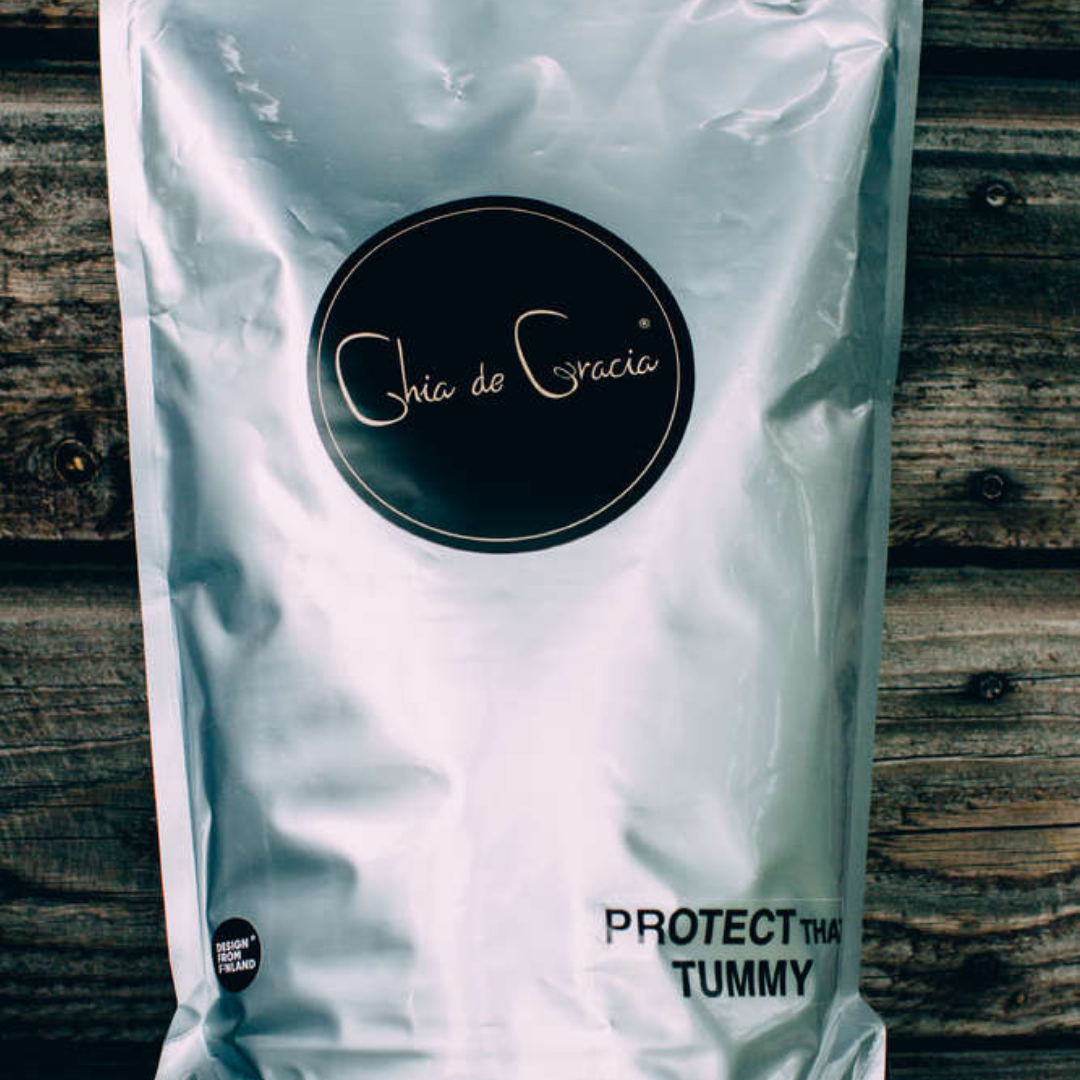
CHIA DE GRACIA PROTECT THAT TUMMY
Protect That Tummy is a 100% natural feed mix that provides soft, mucus-forming fibers, phospholipids, and yeast as part of a varied diet.
- Betala säkert med Klarna eller kort.
- E-mail us, we reply swiftly!
\* Edit these rows under Content > Article page
- BrandChia de Gracia
Description
Article no.: Protect That Tummy
Feeling tense in your stomach? A little off balance?
Many horse owners recognize situations where their horse’s demeanor changes.
Patience wanes, cooperation feels different, appetite fluctuates, or performance isn’t quite at its best.
Changes in daily life—such as longer feeding intervals, travel, competition, a change of stables, or other stressors—can often be reflected in digestion.
A horse’s stomach continuously produces acid, and in a natural setting, the horse eats almost constantly. When this rhythm changes, the balance in the stomach can also be affected.
Why Protect That Tummy
Protect That Tummy is a 100% natural feed mix that provides soft, mucus-forming fibers, phospholipids, and yeast as part of a varied diet.
The mix is specially formulated for situations where:
• feeding intervals vary
• daily life involves physical exertion or stress
• the horse’s stomach is more sensitive
• you want to add softness and balance to the diet
What Happens in Practice
Soluble plant fibers, such as pectin and fenugreek, bind water and swell into a soft, gel-like structure.
When the mixture is moistened, it forms a soft, jelly-like mass that travels with the feed through the digestive tract. This makes the feed mass more uniform, cohesive, and easier to pass.
These types of ingredients are often used in animal feed when the goal is to support gastrointestinal health as part of a holistic approach.
Ingredients – Clear and Practical
Pectin
Forms a soft, jelly-like structure in water. One of the best-known soluble fibers.
Fenugreek
Swells in water and forms a mucilaginous texture.
Inulin
A plant fiber that serves as a nutrient for gut microorganisms and contributes to fiber balance in the diet.
Lecithin
Contains phospholipids, which are a natural component of cell membranes and are also found in the digestive tract.
Brewer’s yeast (Saccharomyces cerevisiae)
A well-known component in equine nutrition, particularly from a microbial perspective.
Rose hips
Contains natural fiber (including pectin) as well as plant-derived compounds.
Contains: inulin, lecithin, fenugreek, pectin, brewer’s yeast, rose hips, and a pinch of love 🧡
When to choose this
Many people choose Protect That Tummy:
• during competition season
• during transport
• during changes in the feeding regimen
• for horses with sensitive stomachs
• or when you want to give extra attention to the stomach as part of the overall feeding regimen
Dosage
Horse weighing approx. 500 kg:
1–2 dl per day
Moisten and mix with other feed.
Do not feed dry.
1 dl ≈ 55 g
The dose can be divided into two feedings.
Not recommended for pregnant mares.
Average Nutritional Value / 100 g
Metabolizable energy 10.5 MJ/kg
Crude protein 14%, Crude fat 8%, Crude fiber 25%, Crude ash 8%, Moisture 8.5%, Sugars 5%, Starch 1%
Research and Background
The ingredients in Protect That Tummy have been studied in several contexts within equine nutrition—with a particular focus on the structure of the feed, water-binding capacity, and microbial activity in the gut.
Pectin–lecithin combination
Studies in horses have described how pectin forms a jelly-like structure in an acidic environment, while lecithin (phospholipids) affects the interfaces between liquid and fat.
Together, they contribute to a layered, jelly-like structure in the stomach contents.
Soluble fibers (pectin, inulin)
Research shows that soluble fibers bind water, swell, and form a soft mass in the digestive tract. They are also fermented in the large intestine by microorganisms, which is a natural part of a horse’s digestion.
Yeast (Saccharomyces cerevisiae)
Studies in horses have shown a correlation between yeast supplementation, microbial activity in the large intestine, and fiber breakdown.
What these studies have in common is that they describe the feed’s structure, water-binding capacity, and microbial processes—that is, functions that are part of the horse’s normal digestion.
Many horse owners recognize situations where their horse’s demeanor changes.
Patience wanes, cooperation feels different, appetite fluctuates, or performance isn’t quite at its best.
Changes in daily life—such as longer feeding intervals, travel, competition, a change of stables, or other stressors—can often be reflected in digestion.
A horse’s stomach continuously produces acid, and in a natural setting, the horse eats almost constantly. When this rhythm changes, the balance in the stomach can also be affected.
Why Protect That Tummy
Protect That Tummy is a 100% natural feed mix that provides soft, mucus-forming fibers, phospholipids, and yeast as part of a varied diet.
The mix is specially formulated for situations where:
• feeding intervals vary
• daily life involves physical exertion or stress
• the horse’s stomach is more sensitive
• you want to add softness and balance to the diet
What Happens in Practice
Soluble plant fibers, such as pectin and fenugreek, bind water and swell into a soft, gel-like structure.
When the mixture is moistened, it forms a soft, jelly-like mass that travels with the feed through the digestive tract. This makes the feed mass more uniform, cohesive, and easier to pass.
These types of ingredients are often used in animal feed when the goal is to support gastrointestinal health as part of a holistic approach.
Ingredients – Clear and Practical
Pectin
Forms a soft, jelly-like structure in water. One of the best-known soluble fibers.
Fenugreek
Swells in water and forms a mucilaginous texture.
Inulin
A plant fiber that serves as a nutrient for gut microorganisms and contributes to fiber balance in the diet.
Lecithin
Contains phospholipids, which are a natural component of cell membranes and are also found in the digestive tract.
Brewer’s yeast (Saccharomyces cerevisiae)
A well-known component in equine nutrition, particularly from a microbial perspective.
Rose hips
Contains natural fiber (including pectin) as well as plant-derived compounds.
Contains: inulin, lecithin, fenugreek, pectin, brewer’s yeast, rose hips, and a pinch of love 🧡
When to choose this
Many people choose Protect That Tummy:
• during competition season
• during transport
• during changes in the feeding regimen
• for horses with sensitive stomachs
• or when you want to give extra attention to the stomach as part of the overall feeding regimen
Dosage
Horse weighing approx. 500 kg:
1–2 dl per day
Moisten and mix with other feed.
Do not feed dry.
1 dl ≈ 55 g
The dose can be divided into two feedings.
Not recommended for pregnant mares.
Average Nutritional Value / 100 g
Metabolizable energy 10.5 MJ/kg
Crude protein 14%, Crude fat 8%, Crude fiber 25%, Crude ash 8%, Moisture 8.5%, Sugars 5%, Starch 1%
Research and Background
The ingredients in Protect That Tummy have been studied in several contexts within equine nutrition—with a particular focus on the structure of the feed, water-binding capacity, and microbial activity in the gut.
Pectin–lecithin combination
Studies in horses have described how pectin forms a jelly-like structure in an acidic environment, while lecithin (phospholipids) affects the interfaces between liquid and fat.
Together, they contribute to a layered, jelly-like structure in the stomach contents.
Soluble fibers (pectin, inulin)
Research shows that soluble fibers bind water, swell, and form a soft mass in the digestive tract. They are also fermented in the large intestine by microorganisms, which is a natural part of a horse’s digestion.
Yeast (Saccharomyces cerevisiae)
Studies in horses have shown a correlation between yeast supplementation, microbial activity in the large intestine, and fiber breakdown.
What these studies have in common is that they describe the feed’s structure, water-binding capacity, and microbial processes—that is, functions that are part of the horse’s normal digestion.