
New
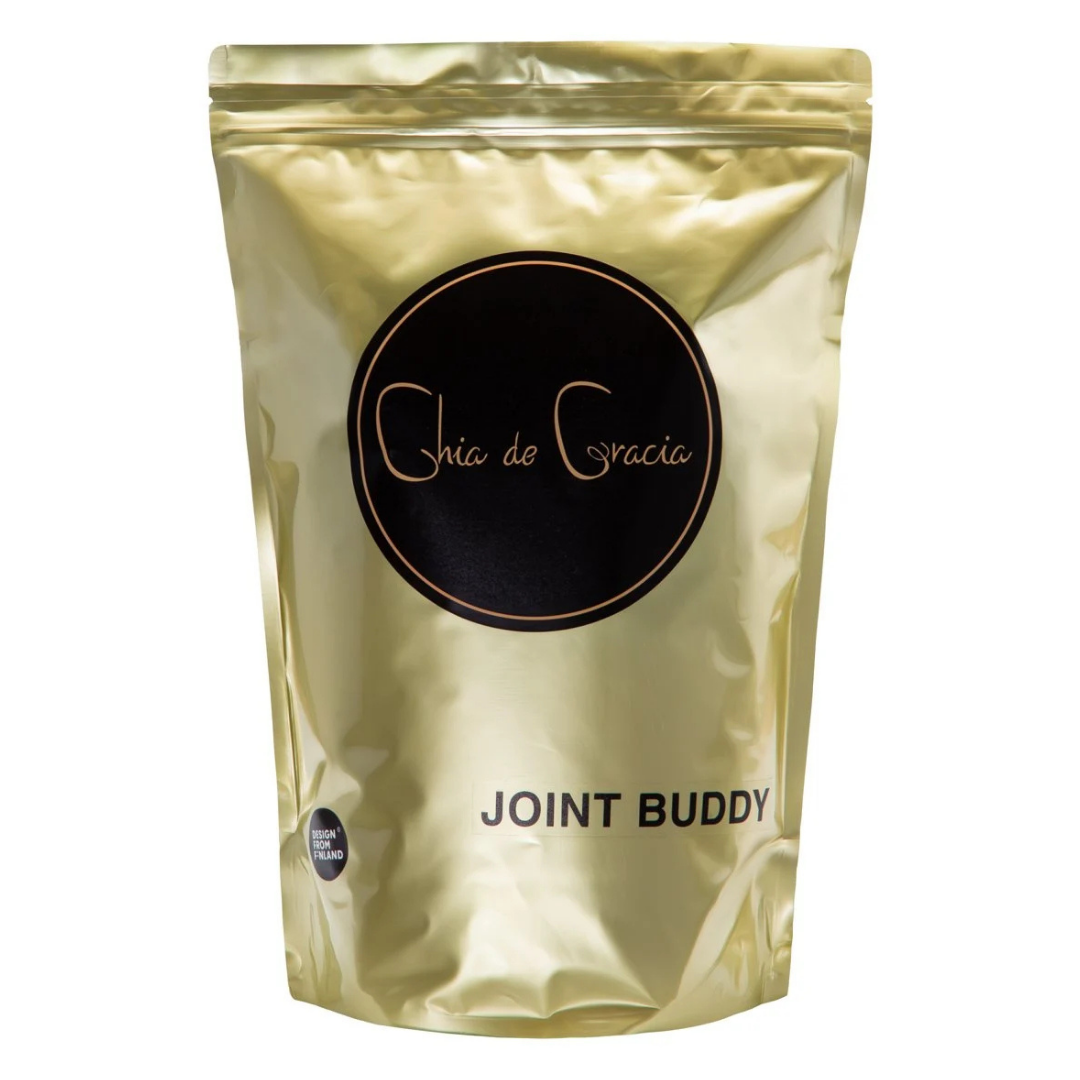
CHIA DE GRACIA JOINT BUDDY DOG
Joint Buddy is a 100% natural herbal blend for horses and dogs that is used as part of their daily diet to support joint health and normal mobility.
- Betala säkert med Klarna eller kort.
- E-mail us, we reply swiftly!
\* Edit these rows under Content > Article page
- BrandChia de Gracia
Description
Article no.: JOINT BUDDY DOG
Joint Buddy is a 100% natural herbal blend for horses and dogs that is used as part of their daily diet to support joint health and normal mobility.
The product is specially formulated for active, highly mobile, and older animals—situations where you want to include a diverse combination of fatty acids, organic sulfur, and the plants’ natural bioactive compounds in their diet.
The daily life of an active animal consists of movement, exercise, repeated stress on the joints, and recovery. Aging is also a natural part of the joint’s life cycle. Regular exercise, appropriate physical activity, and a balanced diet go hand in hand throughout life.
Joint Buddy contains crushed chia seeds, rose hips, MSM, Boswellia serrata, devil’s claw, elk grass, turmeric, stinging nettle, and a pinch of love 🧡
A well-rounded formula for the active pet’s diet
Chia and Natural Fatty Acids
Chia seeds are rich in omega-3 and omega-6 fatty acids. Fatty acids are a natural component of joint cartilage and cell membranes. Chia also provides fiber, which is part of the overall nutritional support for the digestive system and skin.
Rosehip and Vitamin C
Rose hips naturally contain vitamin C and galactolipids. Vitamin C plays a role in collagen formation. Collagen is a structural protein found in cartilage and connective tissue.
MSM and organic sulfur
MSM contains approximately 34% sulfur. Sulfur is a naturally occurring building block in the body and is found in cartilage, tendons, and connective tissue, among other places. MSM serves as a source of organic sulfur in the diet.
Boswellia, devil’s claw, and elk grass
The resin from Boswellia serrata has traditionally been used as part of herbal feed. Its resin compounds are fat-soluble, and the natural fats in chia complement this formulation.
Devil’s claw and elk grass provide the plants’ natural bioactive compounds and complement a varied herbal feed regimen.
Turmeric and stinging nettle
Turmeric naturally contains curcumin, which is part of the plant’s polyphenol composition.
Nettle provides natural minerals as part of the versatile herbal blend.
When is Joint Buddy suitable for feeding?
Joint Buddy is particularly suitable for:
active, high-energy animals
sport and hobby horses
older animals
as part of a well-rounded nutritional program for joints
situations where you want to add plant-based fatty acids, organic sulfur, and herbs to the diet
Suitable for year-round use as part of the daily diet.
Dosage
Dogs
1.5 tsp – 3 tbsp per day, depending on size
1 tbsp ≈ 10 g
Important
Not recommended for pregnant or lactating mares or bitches (due to boswellia, devil’s claw, and elk grass).
A 4-day withdrawal period is recommended prior to competition.
Average Nutritional Values / 100 g
Energy 10 MJ/kg
Crude protein 13%, Crude fat 4.2%, Crude fiber 22%, Crude ash 13.5%, Moisture 12%, Sugar 6%
Background and Research
The raw ingredients in Joint Buddy, as well as their content of fatty acids, sulfur compounds, polyphenols, and the plants’ bioactive compounds, have been studied in research related to horses and dogs, as well as in the literature on animal nutrition.
Dogs
Boswellia, Turmeric, and Devil’s Claw in Joint Nutrition for Dogs
In studies on joint nutrition for dogs, boswellia, turmeric, MSM, and devil’s claw have been examined as part of comprehensive nutritional regimens.
Plant-Based Compounds and Mobility
Studies on dogs have examined plant-based polyphenols, fatty acids, and herbal compounds as part of the diet for active and senior dogs.
The product is specially formulated for active, highly mobile, and older animals—situations where you want to include a diverse combination of fatty acids, organic sulfur, and the plants’ natural bioactive compounds in their diet.
The daily life of an active animal consists of movement, exercise, repeated stress on the joints, and recovery. Aging is also a natural part of the joint’s life cycle. Regular exercise, appropriate physical activity, and a balanced diet go hand in hand throughout life.
Joint Buddy contains crushed chia seeds, rose hips, MSM, Boswellia serrata, devil’s claw, elk grass, turmeric, stinging nettle, and a pinch of love 🧡
A well-rounded formula for the active pet’s diet
Chia and Natural Fatty Acids
Chia seeds are rich in omega-3 and omega-6 fatty acids. Fatty acids are a natural component of joint cartilage and cell membranes. Chia also provides fiber, which is part of the overall nutritional support for the digestive system and skin.
Rosehip and Vitamin C
Rose hips naturally contain vitamin C and galactolipids. Vitamin C plays a role in collagen formation. Collagen is a structural protein found in cartilage and connective tissue.
MSM and organic sulfur
MSM contains approximately 34% sulfur. Sulfur is a naturally occurring building block in the body and is found in cartilage, tendons, and connective tissue, among other places. MSM serves as a source of organic sulfur in the diet.
Boswellia, devil’s claw, and elk grass
The resin from Boswellia serrata has traditionally been used as part of herbal feed. Its resin compounds are fat-soluble, and the natural fats in chia complement this formulation.
Devil’s claw and elk grass provide the plants’ natural bioactive compounds and complement a varied herbal feed regimen.
Turmeric and stinging nettle
Turmeric naturally contains curcumin, which is part of the plant’s polyphenol composition.
Nettle provides natural minerals as part of the versatile herbal blend.
When is Joint Buddy suitable for feeding?
Joint Buddy is particularly suitable for:
active, high-energy animals
sport and hobby horses
older animals
as part of a well-rounded nutritional program for joints
situations where you want to add plant-based fatty acids, organic sulfur, and herbs to the diet
Suitable for year-round use as part of the daily diet.
Dosage
Dogs
1.5 tsp – 3 tbsp per day, depending on size
1 tbsp ≈ 10 g
Important
Not recommended for pregnant or lactating mares or bitches (due to boswellia, devil’s claw, and elk grass).
A 4-day withdrawal period is recommended prior to competition.
Average Nutritional Values / 100 g
Energy 10 MJ/kg
Crude protein 13%, Crude fat 4.2%, Crude fiber 22%, Crude ash 13.5%, Moisture 12%, Sugar 6%
Background and Research
The raw ingredients in Joint Buddy, as well as their content of fatty acids, sulfur compounds, polyphenols, and the plants’ bioactive compounds, have been studied in research related to horses and dogs, as well as in the literature on animal nutrition.
Dogs
Boswellia, Turmeric, and Devil’s Claw in Joint Nutrition for Dogs
In studies on joint nutrition for dogs, boswellia, turmeric, MSM, and devil’s claw have been examined as part of comprehensive nutritional regimens.
Plant-Based Compounds and Mobility
Studies on dogs have examined plant-based polyphenols, fatty acids, and herbal compounds as part of the diet for active and senior dogs.