
New
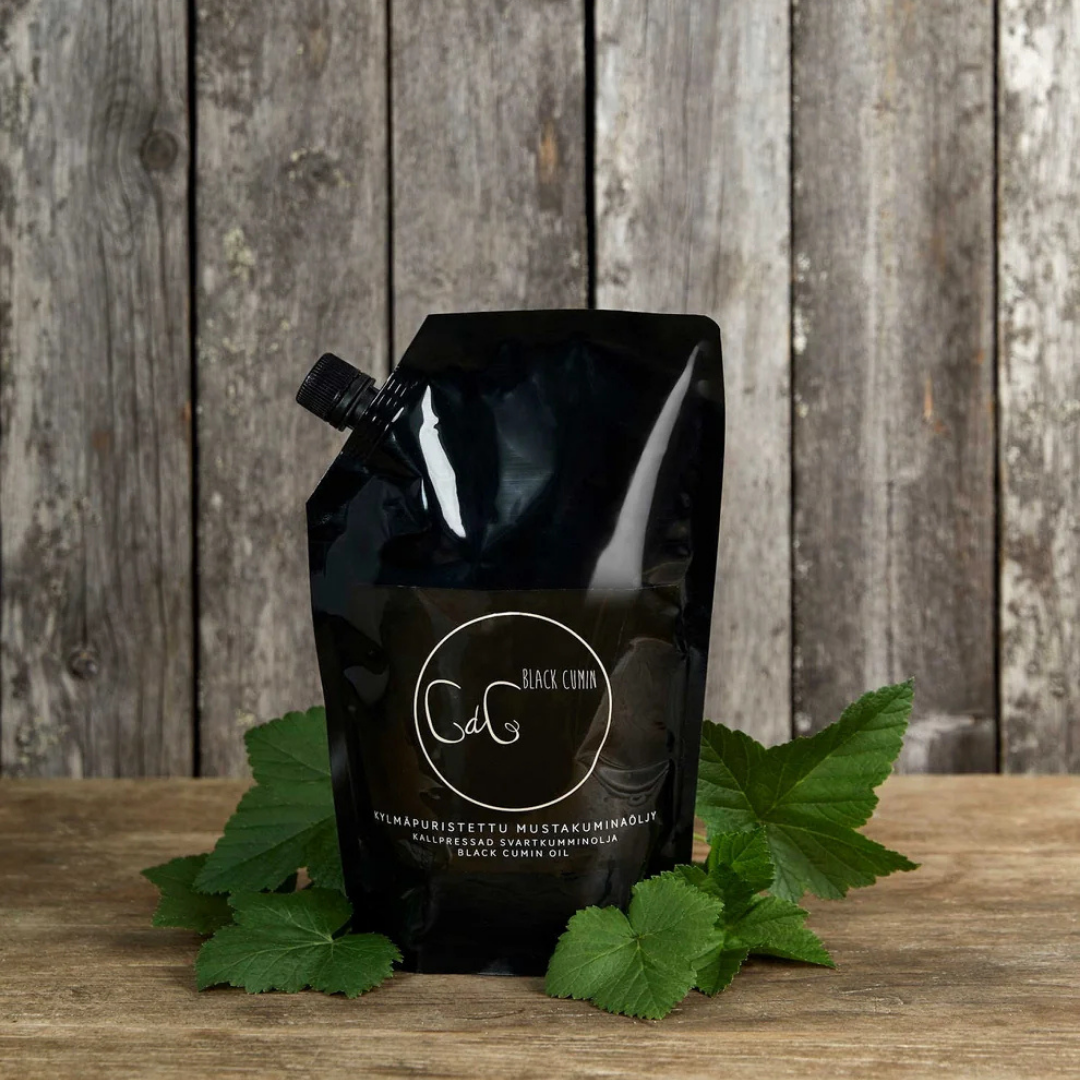
CHIA DE GRACIA BLACK CUMIN
Cold-pressed black cumin oil contains a diverse fatty acid profile as well as plant-derived bioactive compounds.
- Betala säkert med Klarna eller kort.
- E-mail us, we reply swiftly!
\* Edit these rows under Content > Article page
- BrandChia de Gracia
Description
Article no.: BLACK CUMIN
Cold-pressed black cumin oil contains a diverse fatty acid profile as well as bioactive compounds typical of plants.
The oil is particularly rich in linoleic acid (omega-6) and oleic acid (omega-9), which are dietary fatty acids and form part of the normal structure of the skin, coat, and cell membranes.
Black cumin oil is used in animal feed, particularly in situations where the goal is to supplement the feed’s fatty acid profile with a plant-based oil.
Fatty Acids and Nutritional Perspectives
Omega fatty acids are polyunsaturated fatty acids.
Linoleic acid (omega-6) and alpha-linolenic acid (omega-3) are essential fatty acids that the body needs to obtain daily through the diet.
Black cumin oil contains approximately:
– 60% linoleic acid (omega-6)
– 25% oleic acid (omega-9)
– 4% alpha-linolenic acid (omega-3)
These fatty acids are essential for the normal structure of the skin, coat, and cell membranes as part of daily nutrition.
Natural Compounds in Black Cumin
In addition to fatty acids, black cumin oil naturally contains vitamin E, phytosterols, and plant-specific aromatic compounds.
The oil’s best-known compound is thymoquinone, which is part of black cumin’s natural composition and has been studied in several studies as one of the plant’s bioactive compounds.
Black cumin also naturally contains compounds such as nigellone and nigellin, which are part of the plant’s normal structure.
Use in Animal Feed
Black cumin oil is used as part of the daily diet, specifically:
– to provide nutritional support for skin and coat
– for actively working horses and dogs
– to supplement the feed’s fatty acid profile
– in connection with seasonal variations
Dosage
Horse, 500 kg
15–30 ml/day
Ponies and young horses
10–15 ml/day
Dogs
1 ml per 10 kg
Not recommended for pregnant animals.
For best results, use the product for at least 3 months.
Mix with regular food.
Store in a dry, cool place away from light.
The oil is particularly rich in linoleic acid (omega-6) and oleic acid (omega-9), which are dietary fatty acids and form part of the normal structure of the skin, coat, and cell membranes.
Black cumin oil is used in animal feed, particularly in situations where the goal is to supplement the feed’s fatty acid profile with a plant-based oil.
Fatty Acids and Nutritional Perspectives
Omega fatty acids are polyunsaturated fatty acids.
Linoleic acid (omega-6) and alpha-linolenic acid (omega-3) are essential fatty acids that the body needs to obtain daily through the diet.
Black cumin oil contains approximately:
– 60% linoleic acid (omega-6)
– 25% oleic acid (omega-9)
– 4% alpha-linolenic acid (omega-3)
These fatty acids are essential for the normal structure of the skin, coat, and cell membranes as part of daily nutrition.
Natural Compounds in Black Cumin
In addition to fatty acids, black cumin oil naturally contains vitamin E, phytosterols, and plant-specific aromatic compounds.
The oil’s best-known compound is thymoquinone, which is part of black cumin’s natural composition and has been studied in several studies as one of the plant’s bioactive compounds.
Black cumin also naturally contains compounds such as nigellone and nigellin, which are part of the plant’s normal structure.
Use in Animal Feed
Black cumin oil is used as part of the daily diet, specifically:
– to provide nutritional support for skin and coat
– for actively working horses and dogs
– to supplement the feed’s fatty acid profile
– in connection with seasonal variations
Dosage
Horse, 500 kg
15–30 ml/day
Ponies and young horses
10–15 ml/day
Dogs
1 ml per 10 kg
Not recommended for pregnant animals.
For best results, use the product for at least 3 months.
Mix with regular food.
Store in a dry, cool place away from light.